Wisdom’s Worth
By Anthony Casperson
7-4-26
While the film National Treasure is a bit convoluted, there was an interesting aspect to the main puzzle of the adventure.
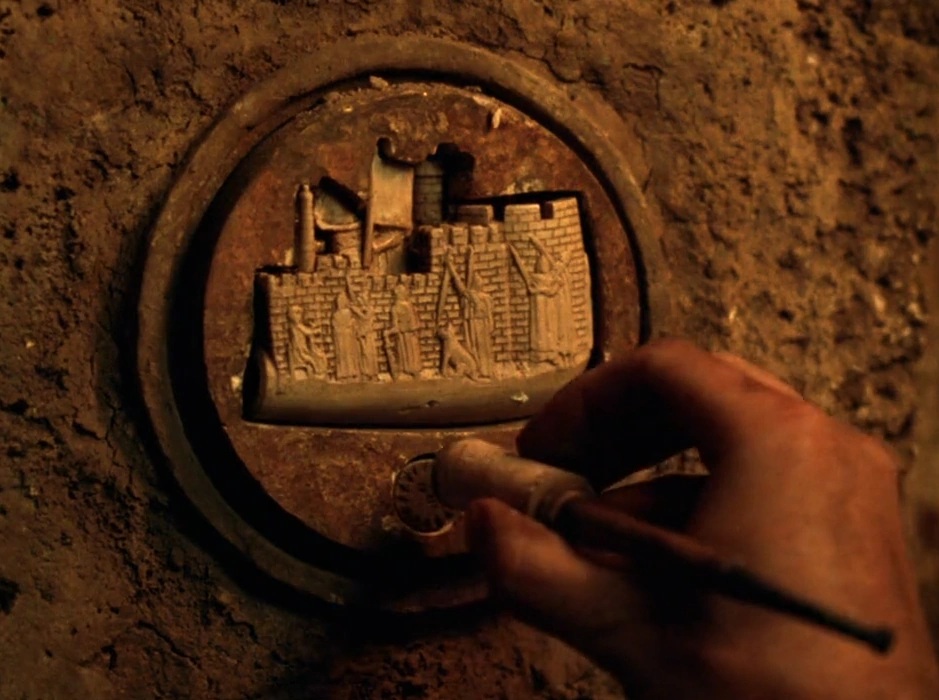
Early on, Nicolas Cage’s character—because who really remembers his characters’ names, anyway—follows his family’s legendary riddle to a frozen over ship. There, he discovers this unique pipe. Left scratching his head for a second, Cage’s character eventually realizes the answer.
On the pipe’s stem there’s a riddle written out. All he needs is something to act as ink in order to roll the pipe stem and read the next riddle of the puzzle. (This is what leads him to the step where he attempts to steal the Declaration of Independence—which makes this interestingly timely for an illustration. It’s a total accident, honestly.)
The story continues for clue after clue. Eventually, the plot leads the characters to just outside what should be the vault of gold and other valuables left by the founding fathers of the nation. But there’s no obvious entrance or way in.
It’s here where Cage’s character takes the same pipe which had been the first riddle’s answer, and realizes that it has more use. The two pieces fit into a special part of the wall, like a key. And with that, the characters reach their destination.
Obviously, there’s more to that story, but the point I’d like for us to keep in our minds is this idea of something seen from near the beginning ending up being far more important to a goal than we had originally thought.
During our summer blog series through Proverbs 1-9, we’ve been pursuing the good of wisdom. And so, it might seem obvious as to how important wisdom actually is in this endeavor. However, you’d be surprised how many people get to right outside of the door to the vault and forget that the answer has been with them all along.
Proverbs 3:13-20 shows us the second poem of Lady Wisdom. And it speaks to the fact that wisdom is far more valuable than we’ve ever considered.
Even the very first word of this section tells us how fortunate a person is when they diligently seek and discover wisdom. “Blessed,” or as some translations unfortunately put it, “happy,” doesn’t just carry with it the idea of, “Yay! I have wisdom. Cool.”
Rather, this word for “blessed” brings with it the connotation of aspirational preference. People who know what’s good look at those who have wisdom, and say, “I wish that were me.” It’s a softer version of jealousy which should prompt others to go out and attain wisdom as well. When someone looks at the amazing thing their friend has, and it makes them say, “Lucky.” That’s what we’re talking about here.
Essentially, it’s the person who has a eureka moment with wisdom feeling the favor of God, and the appreciation of their friends who now want to find wisdom too.
And remember, wisdom here isn’t nebulous or ethereal. Wisdom in the book of Proverbs means technical skill or practical application. And this idea is carried over to the second half of verse 13, when it says that the one who gains understanding is also blessedly fortunate. “Understanding” here is like the skill of a master artisan. It’s something tangible for others to witness clearly.
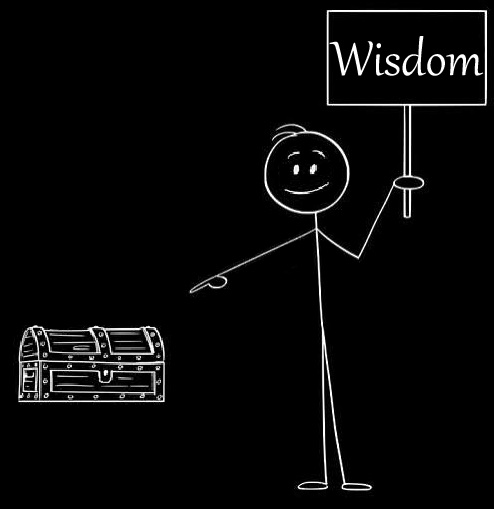
But why should a person’s eureka moment with wisdom lead others to aspire to reach for the same? Because wisdom is better than a vault full of valuables.
Wisdom is better than the business of silver. And better than the surplus of gold. She’s more valuable than the daily grind of the workday, as well as more beneficial than having a full bank account. Even the value of precious gems is like prop jewelry next to wisdom.
People strive for more stuff and more money. I mean, the treasure is often what makes people work so hard. Yet wisdom is too often left to the side. Despite the fact that without wisdom, there is no entrance into the coveted vault. That practical application is the key to get inside.
We should seek wisdom in direct correlation as to how valuable it is. Since wisdom—which has its beginning in the fear of Yahweh—is worth so much more, we should seek it with greater fervor than we do wealth.
And it’s not just for wealth that wisdom has value. Wisdom produces the life of peace.
Verse 16 tells us that wealth might be in her left hand, but in her right hand is life. In the place of greater honor stands the length of days which often—but not always—comes from the blessing of God to the wise.
Though, again, it’s not just a long number of days, but a life of pleasant peace. Of shalom. The word means a wholeness of life. Completeness. Wisdom doesn’t always mean that wars are kept at bay from our lives. But it does mean that no matter the surrounding waves of trials and troubles, those who have wisdom won’t drown from a capsized boat.
As well, those who have discovered wisdom are like those who have found a tree at an oasis in the desert. Life-giving sustenance, when everything around shows only the way to death.
Verse 18’s latter half reiterates just how fortunately favored of God those who find wisdom are. This word for “blessed” bookends these six verses speaking of wisdom’s worth. But the next two verses show us that wisdom isn’t just important to humanity, she’s valuable to God’s entire design of the world.
Yahweh mixed wisdom in with the foundation of the earth. He hung the heavens on wisdom’s support. With wisdom, he tears apart the chaotic nature of the unknowable depths. And it’s through wisdom that the process of rain brings life to the desert places.
Wisdom is a primeval force of creation itself. When we seek and find her, we discover the beauty of our Founder’s methods. She’s more valuable than a vault of gold and priceless objects.
So, let’s realize that wisdom isn’t merely a good thing for life. It’s the best prize we could ever hope to find.
And we don’t have to steal any declarations to discover that truth.