The Lure of the Forbidden
By Anthony Casperson
8-8-26
In the video game Mass Effect 2, the player’s character—Commander Shepherd—gathers a team for a specific mission. Most of the game revolves around recruiting this Dirty Dozen-like crew, and also helping them with their unfinished business.
One of the recruited members is a powerful biotic justicar named Samara. (Think about a blend of Jedi mind powers and mental-based superpowers with a paladin personality, and you get the general idea of her character.) And Samara’s unfinished business is dealing with her daughter, Morinth.
Essentially, Morinth is a serial killer with sexual predations. She has a genetic condition where her biology kills her mates—and I’m not going to get into the technical aspects of how that works, just understand that she can’t control it and it happens in the moment of that intimate encounter.
Samara wishes to take down her daughter…permanently. The daughter enjoys her conquests too much to be left alive. However, during the mission dealing with Morinth, Commander Shepherd can betray Samara and instead ally with her daughter. Both are powerful biotics, which is all the mission needs. Either one would suffice. It’s a matter of moral code as to which side the player chooses.
However, if Shepherd sides with Morinth, there’s another choice for the player to make. See, after killing her mother, Morinth is a little worked up and asks if the commander wishes to join her for a…particular activity.
After having heard for hours of gameplay that Morinth is deadly during this activity, and even having seen Morinth’s most recent victim’s body, Commander Shepherd can still think that they are hearty enough to survive. And go with it.
The cutscene that follows, and the Game Over screen that pops up afterward, prove otherwise.
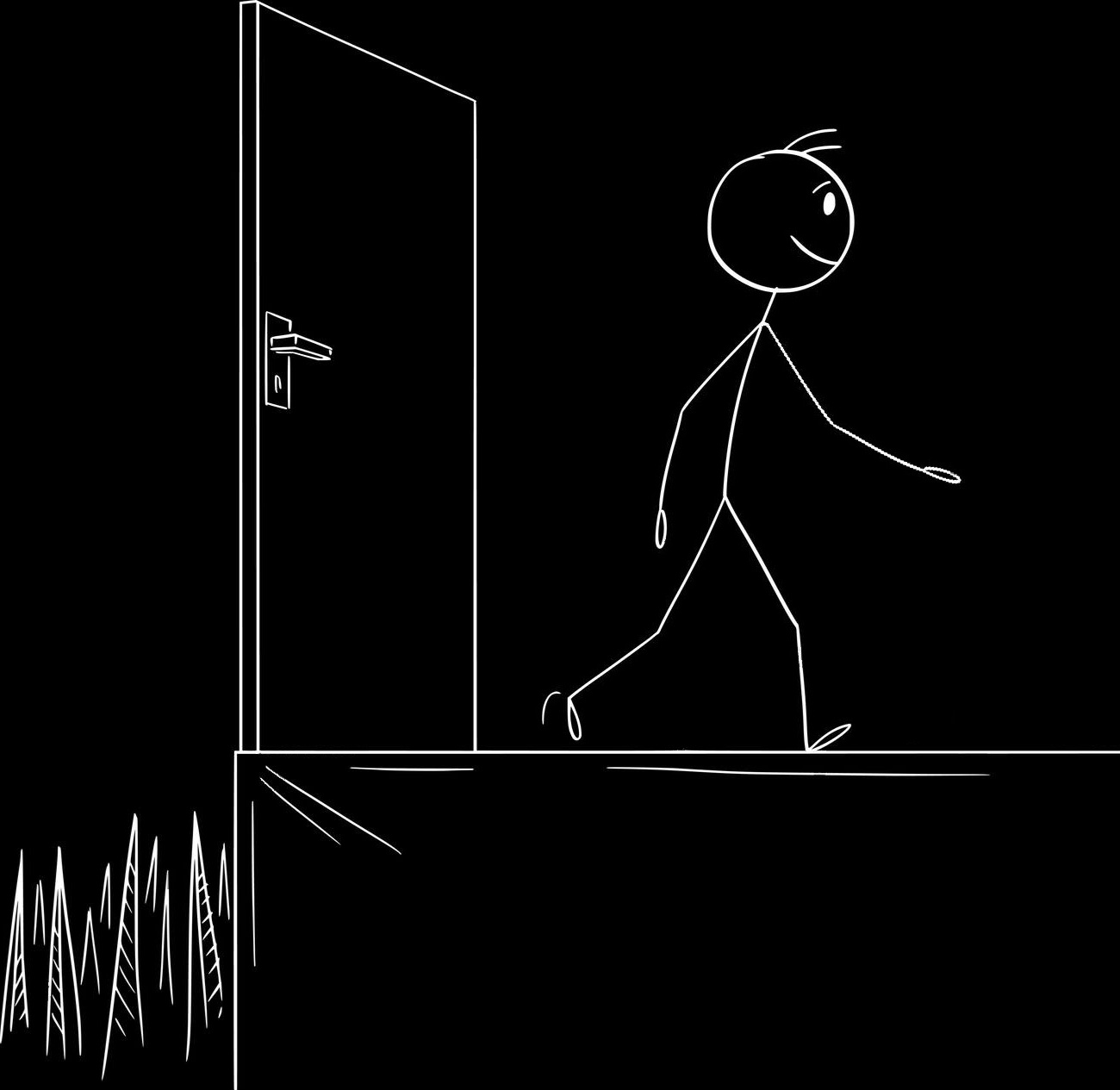
When you’re told over and over again that something is deadly and dangerous, it’s a good idea to stay as far away as possible. Don’t engage in that activity. Don’t walk through that door. And even better, stick with the ally that you already have, rather than the one who revels in their body count.
It’s kinda funny how certain lessons are proven true in stories such as this, as well as in ancient texts of wisdom.
This week in the Solomon’s Summer School blog series, we’re looking at Proverbs 5. And it has many parallels to our opening illustration. It uses human sexuality as its own illustration for wisdom versus foolishness. An illustration with just as deadly of an end as our opening illustration when choosing one of the sides.
In verses 1-2, we see the general call that’s become common for each of these recent lessons from father to son. Solomon calls upon his son to listen and pay attention. Hold onto the shrewdness of wisdom because this lesson is one of life and death.
After this opening request, Solomon moves to verses 3-6 where he describes this forbidden woman. Some versions refer to her as the seductress, but the Hebrew word carries with it the idea of “strange” or “unauthorized.”
In Leviticus 10:1, the priests Nadab and Abihu offer up “unauthorized” fire on the altar of incense and are stricken dead because of it. This shows us two things for just this one word. First, the forbidden/strange/unauthorized thing is any action that goes against God’s prescribed methods. If God provided a proper way to interact, and we do something else, it is attempting to follow this “forbidden” word. And second, it shows us that the “forbidden” is deadly.
So, when Proverbs 5:3 speaks of this “forbidden” woman, we should already have thoughts of caution hit our minds.
But, much like with Morinth, the lead in to the danger is pleasurable. The forbidden woman’s lips drip honey. It tastes sweet in the moment. But our lips—which verse 2 had told us to use in guarding knowledge and insight, to speak forth our fear of Yahweh—have left their post to partake in this tempting offer.
Remember the last blog where we saw that our speech shows the direction our heart is set. Thus, with lips engaging in “forbidden” sweetness, our focus reveals itself clearly. Toward a disastrous landmark.
And the end of verse 3 adds to this idea of heart’s direction based off of our mouths. It says that this forbidden woman’s speech is smoother than oil. Technically, the word translated as “speech” here is the word for palate. And I’m pretty sure there are very few things a person can be doing with their mouth area to realize how smooth the roof of another’s mouth is.
Solomon is pushing the illustration to speak toward the fact that the lead in to following fooloshness can be incredibly pleasurable. His word choice is specifically showing the lure of the trap. And that purposeful vocabulary is just as sharp as he proves the deadliness of the encounter.
The lips that might have tasted sweet to begin with will only turn to bitterness in the end. And the words which felt so smooth will only leave us with a bloody tongue because of its double-edged blade.
Her steps lead only to death. Her path follows down to Sheol. This word, Sheol, means grave. But it is built off of the verb “to ask.” Open-mouthed, the grave asks—begs—for more and more to fill it. Unsatiated craving that finds no end, even as it leaves all who fall in as husks.
This forbidden woman of foolishness never takes a second to consider the path of life. The ways of godliness don’t ever flit through her mind. She’s only interested in her own lusts and wherever they lead.
Always to death.
Instead of that, if we want to follow a mouth, let it be one which speaks of wisdom. Let us stay far away from the forbidden woman of foolishness, lest we come to regret it too late.
Verses 7-14 show us the consequences of not listening to this wisdom. If we go near the opening of her door, our might and splendor and majesty will be taken by another. We’ll lose years of our vigor, wasted away because of godless pursuits. Strangers will benefit from our might. And the fruit of our labor will only go to another.
Oh, how many have awoken from foolish lusts, only to realize life has passed them by?
When we come to the end of our lives, as that final Game Over screen pops up, we’ll find ourselves only husks of existence bemoaning the fact that we hadn’t paid attention to the warning signs. We’d thought ourselves hearty enough to withstand the life-leeching draw of foolishness, only to discover too late how wrong we were.
Those voices correcting us and calling us to change our ways, the voices that we’d hated and despised, were right. They’d meant to bring us back to the way of life. Call us away from foolishness. But we’d mocked and refused to heed the words of those would-be teachers and instructors.
We’d thought them only as people who wanted to ruin our fun. But once honey turned to bitterness and we started to taste the blood of our own tongues, it was too late. And we find ourselves at the brink of total destruction.
If only we could’ve gone back and warned ourselves to never go down this road. But would we refuse even our own self as teacher of wisdom? If we even recognized the husk in front of us.
But Solomon provides the positive side of what we should do with our lives in verses 15-19. He speaks of following wisdom with a double-layered metaphor. Following wisdom compared to a man being faithfully committed to his wife, and the wife being compared to a water source—a source of life.
He says, in verse 15, that we should drink of our own cistern. Rather than going to drink from any source of water, drink deeply from what you already have. Rather than trying to find pleasure and perceived goodness from “forbidden,” “unauthorized,” and ungodly things, seek the actual good that God has for us.
We have wisdom at home with God, why do we need to chase the foolish knock-off?
And likewise, don’t treat the godly as something ungodly. In the husband/wife analogy, don’t share your wife with everybody else. It’s not only good to stick to our own cistern, but we should also treat the godly things we have in the ways God prescribes. Turning what we already have into the “unauthorized” is just as bad as heading out to seek the path of the “forbidden.”
Solomon dives deeper into the pleasures of the godly ways in verses 18-19. He says to rejoice in the wife of our youth, our first love. Metaphorically speaking, this is the wisdom of fearing Yahweh. Drink deep of wisdom. Let her form be pleasing to our sight. Let her fill us with delights. And let us be so full of her goodness that we stumble like a drunk man. Infatuation so pervasive that it leaves our legs weak just to be close to her.
Why would we want the fleeting pleasure of the unsatiated grave, when we have the never-ending flow of life from the wisdom of God? Why be intoxicated with one who would rob us of all of our belongings, when we can rest easily in the arms of wisdom? Why become a husk, when real life is there from the one already with us?
The passage ends with a comparison of the two paths. We all are seen by the eyes of God, but only those who seek him consider his ways. Those who refuse godliness will eventually feel the trap close. Feel their legs caught by the snare’s cords. And feel death come for them. All because the forbidden woman of folly led them to the Game Over screen.
Solomon’s illustration concerning human sexuality is fitting for application. Following the godly guidelines of sex will lead to better lives, if we actually follow them.
But there are other applications of keeping close to the godly wisdom we have, rather than pursuing the open mouth of death’s trap. Money, prestige, power, and a whole host of other things. They all have a godly method that can be within reach, a purpose for which we can use them. But when we pursue their pleasures rather than the ways of God, that is when the trap snaps shut.
So, let’s pay attention to the warning signs. Listen to the words of wisdom rather than the honeyed words of the forbidden woman of foolishness.
Don’t engage in that activity. Don’t walk through that door. And even better, stick with the wisdom that you already have, rather than the foolishness that revels in its body count.
That way, you won’t have to regret the Game Over screen.