Hope of Eternal
By Anthony Casperson
4-18-26
It was an interesting take on discussing the effects of war on human beings. The video didn’t just speak to individual trauma and attempted reintegration, but also to the generation-wide shift in perspective because of those horrors. As well, the mode of discussion came from the comparisons and contrasts of three novels written by those who fought in World War I.
Narrative has an ability to discuss the complexities of human existence in a way that detailed histories aren’t capable. It reaches for the heart more than the mind. Thus, narrative allows us to experience the oft-unspoken turmoil of greater tragedy without bland statements of, “What a terrible time everyone involved had in this event.”
This particular YouTube presenter chose to discuss the three books, All Quiet on the Western Front by Erich Remarque, The Sun Also Rises by Ernest Hemingway, and The Lord of the Rings by J.R.R. Tolkien. (Yeah, yeah, we all know which of the three is the reason I watch the channel’s videos.)
While I’ve never read the first or second of those books, the presenter shared thoughts on what she considered the similarities to be. There was a certain loss of innocence common between all three men’s narratives. A sense of valor stolen, now that the soldier-cogs had been spit out of the machine of war.
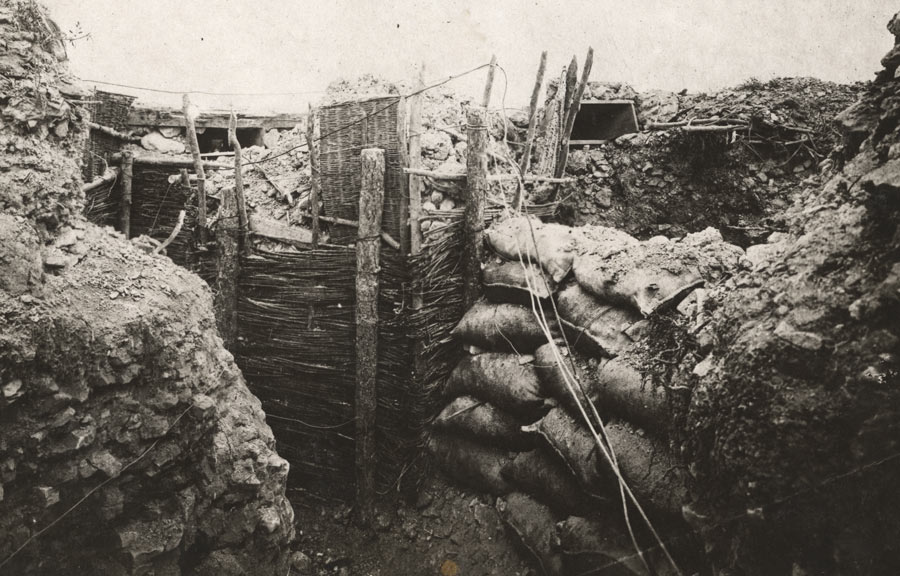
Dreams and idealizations of what it meant to fight for even good and right things fell into the mud and blood of those trenches. Sons and brothers dehumanized into gun-toting meat, sent to slaughter.
Yet the manner in which the three authors spoke of their experience had unique takes on the experience.
According to the presenter, Remarque’s work shows the direct effects of war on the soldiers. This includes the questions and doubts that strike when one side considers how similar the other side is. And the story ends with the death of a soldier that passes without fanfare or grief. There’s merely the silence of a news-less western front that leaves all who knew the soldier with unresolved questions of what happened to him.
Hemingway’s work—again, according to the presenter—shows aimless, expatriate veterans trying to find a way to build a life after the war is over. Some consider these former soldiers as lazy or careless. Yet, the veterans’ reactions are built upon the numbness of deep psychological wounds. The choice was to either live in unrelenting pain or sever the metaphorical nerve. And numbness seemed better than pain.
And, of course, Tolkien’s work turned toward the fantastical. A fairy story unafraid to shy away from the gruesome nature of war. Tolkien might’ve shown it more in the industrialized mechanisms of Saruman and Sauron, but you don’t need to look any further than Frodo’s doubts of there being a return journey from Mount Doom to see that toll. If we add in the Scouring of the Shire—which the movies omit—we see that war even follows the hobbits home. And Frodo’s wounds never heal either.
For all three authors, the commonalities of the narratives indicate a rueful glance at what their once-boyish eyes had gleamed at. But the reality of the world’s harshness showed them something darker than they’d ever dreamed.
Yet, the presenter did mention that she saw a difference between the first two works and that of Tolkien. And it wasn’t entirely to do with the choice of genre in which they wrote. She mentioned that she could see hope in Tolkien’s work that wasn’t truly present in the other two. Tolkien’s “eucatastrophe”—his term for a turn of events that leads to a joyous end—broke through in his work, while the others remained mired in their catastrophic perspectives.
The answer she offered as to the differences between the books was functional, as far as it went. But I can’t help seeing Tolkien’s faith in the God of the bible being the reason for his eucatastrophic leanings.
Faith in Christ brings with it a calling to look past the mud and blood of the present, glancing to the land of perfect peace and healing. It allows the faithful to continue on, despite how purposeless it all seems in the moment. There’s another perspective that’s grander than anything we could ever have as humans.
In verses that we’ve looked at during previous blogs, we’ve seen Paul speak of being “afflicted in every way, but not crushed; perplexed, but not driven to despair; persecuted, but not forsaken; struck down, but not destroyed; always carrying in the body the death of Jesus, so that the life of Jesus may also be manifested in our bodies” (2 Corinthians 4:8-10). The Apostle speaks to a perspective shift that aligns to the purpose of God.
Just a few verses later, Paul explains a bit more directly as to what this different perspective is. In verses 16-18, he says that we don’t lose heart because even as the outer nature wastes away in the rot of this sinful world, our inner nature is being renewed day by day, though our faith in Jesus. Compared to an eternity of heavenly glory, these “momentary afflictions” are but temporary muck that will be rinsed off one day soon.
In the middle of the journey, we may have doubts and questions. At the base of Mount Doom, we might question there ever being a return journey. And when our battles and wounds follow us home, we have every right to question if the traumas will ever end. But, for those who follow Jesus, there comes the day that a ship is ready for us to sail to our own version of the shores of Valinor.
Those ever-present wounds will finally find healing.
The perspective toward eternal life doesn’t make the present suffering any easier, but it does allow us to cling to hope in the midst of the pain and loss. We can experience the same trails and troubles as others, but the hope that Christ is for us keeps us from being washed away by the currents of unresolved silence and numbed existence.
When we look to the things that are unseen, we witness godly beauty that shines beyond the horizon of the trenches filled with mud and blood. Beauty that doesn’t fade as we witness the worst of humanity, but that shines all the brighter because God himself shed his blood for us, in the midst of our dirt and shame.
Let us look to the only hope that doesn’t fade once we see the world for what it is. Let’s look to Jesus, who calls us to view this life’s pain and suffering from an eternal perspective of hope.