Before the Deal Alters
By Anthony Casperson
8-15-26
In Star Wars Episode V: The Empire Strikes Back, the audience is introduced to Lando Calrissian and the mining colony under his governance, Cloud City. But, as anyone who has watched the film knows, this detour is anything but the peaceful rest stop that it appears to be.
Before Han, Leia, Chewbacca, and C-3PO arrived, Darth Vader and his underlings showed up. They threatened Lando to play along and betray his old friend.
At first, the Empire’s plan didn’t seem so bad. Let Vader use Han and the rest as bait to lure some random jedi to whom Lando has no connection. What’s one stranger’s life when compared to the people Lando knows and has worked with for so long here in Cloud City?
But then, the torture started. Lando’s friend was being hurt because of a choice that he had made. Lando tries to confront Vader, but with only a threat for noncompliance. The city administrator then tried to help Han and his allies, but they rejected his hand because this mess was all Lando’s doing. And trying to explain didn’t help.
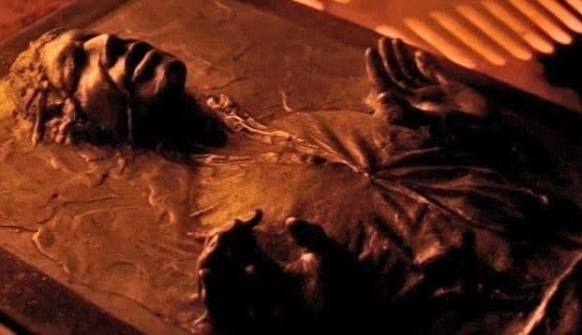
After this, news of using Han as a test subject for carbonite freezing made Lando truly regret ever working with the Empire. And worse, the bounty hunter Boba Fett was going to take Han to Jabba. Lando again tried to rail against Vader, only to be met with “Pray that I do not alter the deal further.”
At least Lando might be able to save Leia and Chewie from the Empire’s clutches, he figured.
However, that too was quickly negated. After Han had been frozen, in perfect stasis, Vader told Lando to have the princess and the wookiee transferred to Vader’s ship.
That was the last straw. Lando mobilized his forces, and begins the rescue mission. Sure, it didn’t go perfectly, because Han was still taken, and the city had to be abandoned, but that all is a part of the story that goes beyond my point for today.
In the details above, notice the progression from Lando’s perspective. Things were not ideal to start. But then the issues just kept getting worse. Yet, getting out of that terrible mess got more and more difficult. It was a situational version of quicksand. The more he got sucked in, the harder it was to escape.
And he’d walked into it willingly. (Sort of.)
This idea of escape being needed, but more difficult as one goes deeper in, is a large part of our passage for this week’s lesson in our blog series called, “Solomon’s Summer School.”
In Proverbs 6:1-19, we see three examples of people who got themselves into a mess, and are shown that getting out is the best option. Each of which has gotten into the mess deeper than the previous person. Then, after those examples, we hear about a non-exhaustive list of things that can drag us to even more deadly messes.
We start with verses 1-5, where Solomon uses his son as example of the one who walked into the mess willfully. This shows us that any of these examples could be us, without casting judgement as if we actually had performed them. The use of placing us in the role of the first example, thus, makes us realize that these are not theoretical examples that are unlikely, but things that we should watch out for.
Lessons we should truly learn.
This first example is of someone who vouches for another. A co-signer of a debt. Now, the idea of co-signing isn’t the problem, but rather doing so for someone who isn’t actually capable of following through on living up to the deal, or paying it back. We human beings have enough to deal with for our own debts, why agree to pay for another’s as well?
Verse 2’s use of trapping language, like snares or being caught, verify the reading of co-signing a debt for one who can’t repay, rather than just co-signing in general. That trapping language also is seen in verse 5, but we’ll get there.
So, what do we do when we feel that first snag of trap? Do everything in our power to get out of it. Deliver ourselves from the trap. Go, with all haste, to the person we co-signed for, and ask them to release us from the debt. Beg them. Don’t sleep on it. Flee. Escape.
Like a gazelle leaping away from a hunter, or a bird flying out of a trap, let’s get ourselves out of the mess. Yes, there will be ramifications. But they will be far less troublesome for us if we get out now, before the trap has fully triggered, than they will be after the snare grabs a hold.
A little willful trouble, sure, but escaped from before it was too late.
But then, the example in verses 6-11 goes deeper. Yet, this one starts with the lesson that should be learned from nature.
Consider the ant. They are quite industrious. Without a taskmaster watching over them, they go out and search for food. But they don’t eat it right there and then. No, they bring it back to store in the home. And then go out again to repeat the process. They gather when there is plenty, so that when the time of little comes, they are prepared.
This is the lesson, which the second example of someone who’s in too deep needs to learn.
Solomon speaks to the sluggard, the layabout, the person who just lazes the days away without any sort of productivity for the world around them. To them, he says, “Wake up!” Are you gonna just lie there all day?
“Oh, I’m just resting my eyes.” “I’m on my break.” “It was just a catnap.” These are oft-used excuses for someone who doesn’t want to actually go out and do anything. They would rather just let the trap take them than actually try to run out of it, because running would be too much of a hassle.
But even to them, Solomon gives the same advice. Get out of the trap. Wake up. Stop the robber. Disarm the thief. Rather than have even the minimal supplies we do have be taken from us, escape the life of laziness and build up supplies for the hard times.
Deeper willful trouble, but escapable, if we actually try.
However, verses 12-15 show us an example that is so deeply gone, that there’s not even a command to escape for it.
We see a “worthless person.” This is the term “a man of belial.” A person who is so utterly godless, so utterly immoral and unethical, that there’s not really hope for them to escape. And anyone who looks at them long enough will be certain of it.
But what makes them “worthless” to the society around them? They are the definition of wickedness and ungodliness. Their mouth speaks nothing but crookedness. Their eyes shift and wink maliciously. They use their feet to indicate mischievous signs. Their fingers teach miscues to any who seek to learn them. Their hearts are so perverse that evil is the only thing they plan. And their hand sows nothing but dissention and discord among other people.
Every single body part is used in their godless deceptions. Nothing they do is for the betterment of anyone other than themselves and their own enjoyment. Wickedness is the landmark upon which they set their heart.
It’s for this reason that Solomon doesn’t tell them to escape or run out of the trap. That snare is the very same godlessness that they’d directed their whole life toward. To escape would mean following something other than complete and total godlessness.
And so, the trap snaps around them. The mouth swallows them whole. Calamity strikes. And brokenness that is beyond healing surrounds them.
Willful godlessness that is so difficult to escape, and few ever will.
This level of “worthless” wickedness makes Solomon consider more examples of people who are so deeply set toward godlessness that they will find it difficult to get out and run away from the trap.
In verses 16-19, he speaks of things that are abominations to Yahweh. The most utterly despised and terrible things that so often refuse to let go of those in the trap. These abominations are the kind that keep changing terms, saying, “Pray that I do not alter the deal further.”
First, we see “haughty eyes.” Pride. The self-glorification that considers ourselves greater than or equal to God. This is what the original sin of Adam and Eve was. No wonder it is an abomination to God. When we seek to replace him and his ways with our own selves, we’re falling for the same thing as the Enemy himself.
Similar to the first, is a lying tongue. Satan is the father of lies, after all. And a lie is what led to that first human sin.
We can just speedrun the rest because they are pretty obvious as to why they are wicked. Murdering the innocent, having a heart that plans only evil, having feet that run excitedly toward wickedness, being a person who lies while under oath just so that an innocent is sent to punishment, and being one who only spreads dissention and discord. They are all abominations performed by the utterly godless. Notice that a number of them were actually in the discussion for the third example.
And the list isn’t complete. The “six, no seven” nature of the set up in verse 16 shows us this idea in a style that’s common in the Hebrew language. So, there can be many other utterly godless actions that we can willfully walk into. But they will all lead to the same trap.
A trap which we should try to escape from, as soon as possible. Lest the deal alter beyond escape.
Some might look at this passage and see only judgement and punishment. But the fact that there even is an escape route at all shows us the grace of God. Those of us who fear Yahweh and watch out are able to see the trap before it triggers. And even when we fail to stay on the untrapped path, God’s grace can help us out with limited ramifications.
We need not suffer like the godless who have gotten in too deep.
Therefore, no matter how deeply we’ve gotten into the trap set for us, the call of wisdom is the same. Get out. Run. Flee. Escape. Wake up. And don’t let the trap break us beyond healing.
Wisdom is found outside of the deal. Sure, it’s better to not walk into it to begin with. But if we find ourselves there, try to get out as fast as we can. Preferably before our friend is frozen in carbonite.