Turn to Me
By Anthony Casperson
9-12-26
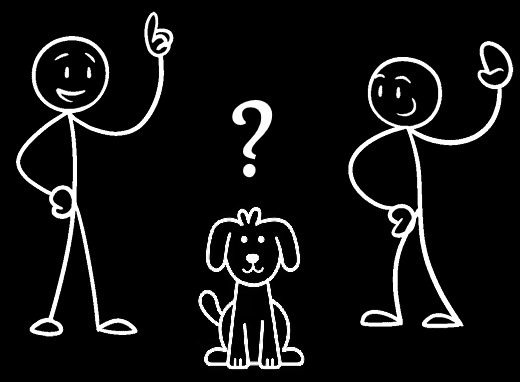
Two people argue over who the pet belongs to. They both say the animal is theirs and loves them the most. And then the suggestion is to place the pet equally between the two choices, and let them decide.
It’s an old story trope, to be sure. But it still has a reason for existing.
Essentially, whichever direction the animal goes is supposed to be the one that they want. An animal will often have one person whom they hold in higher regard than the other. And thus, they are more likely to go to that person first, with all other things being equal.
However, in stories that use this trope, one side often cheats. They make promises that are unlikely to be true. Or they have the animal’s favorite food in their pocket. Something to give them an edge over the other option. And that enticement is almost always from the side that is the worse option for the animal.
As we’ve gone through this summer—and a bit longer—series through the first nine chapters of Proverbs, we’ve had two choices in front of us. On one side is Lady Wisdom, who calls us to a life of godliness and following the ways of God, which is epitomized in the saying, “The fear of the Lord is the beginning of wisdom.” And on the other side has been Folly, who calls with grand enticements of ungodly pleasure, but who will only lead to death.
By now, it should be obvious which side is better for us as human beings, let alone as those who follow Jesus. But as we get to Proverbs 9, we are placed seemingly equidistant from Lady Wisdom and Folly. And we are asked to choose.
To which direction will we turn?
That is kinda the point of this chapter of Proverbs. We’re at the end of the lessons. And only we can make the choice for our own life. We’ve looked at the lessons. And our “simple” naivete is no longer a defense allowing us to stay in the middle.
On the one side, we see Lady Wisdom. Verses 1-6 show us what she offers.
She’s prepared her home with elegant purpose and filled it with life-giving sustenance. Lady Wisdom built her house herself. With grandeur and a seven-pillared wrap-around porch. She has plenty of nourishing food, and has already prepared the drinks for any who draw near to her, to learn.
Wisdom has sent her maids out to call for any who will hear. Out in the public spaces around town, they spread her message. “Whoever is simple, let them turn in here.” Any who lack wisdom, any who need help understanding the ways of this world, go to her. And she will teach with great application.
And to those of us who lack conviction of heart, she calls out, saying that she has refreshments prepared. All for the sake of helping us leave our simplicity behind. She calls us to life. A path of practical insight in the world is her primary concern for us.
She wants us to leave behind the ignorance of youth, and become adults ready to interact with the world in practiced skill.
Then, on the other side, we have Folly. Verses 13-18 show us what she offers.
Folly is a raucous party personified. She seeks little more than the base pleasures of this life while keeping all other thoughts far away.
Her house has been built on the heights in such a way that she doesn’t even need to send out helpers to gather those she calls. Folly can sit right on her front porch, throw her hands up in the air, and call out.
And Folly’s call sounds very much like Lady Wisdom’s call…at first. “Whoever is simple, let them turn in here.” The words are the same. Proof that Folly can sometimes sound like the wisest thing a person can do. But the rest of Folly’s words prove the difference for those discerning enough to listen.
To those who lack conviction in their hearts, she tries to provide them a new ethic. A skewed one. Like Wisdom, Folly offers food, but notice the difference. “Stolen water is sweet. And bread eaten in secret is pleasant.”
Lady Wisdom offers meat and wine, while Folly offers only water and bread. But not even really that, because Folly’s temptation is sexual in nature. Adulterous temptation that might sound good in the moment, but will only lead to destruction and death.
Folly’s guests are nothing but ghosts, because her home leads to the grave itself. The simple, naïve, and young are food for death. Trapped animals consumed by Folly’s false promises.
So, we have these two choices. The same two we’ve looked at for months now. And you likely have thoughts about the choice. Possibly even arguments against this dichotomy.
Maybe you think that life isn’t that simple. Wisdom and Folly. God’s ways or anything else. Maybe what you really want is some of that base pleasure outside of the declared ways of God. And it hasn’t led to death yet. As a matter of fact, you might say, some of those who say that they’re following the ways of God look so miserable. Or they fall into the same temptations and actions. So what’s the difference?
And while some of that might be true, or at least seem true in the moment, you’ll notice that I’ve skipped verses in the middle of Proverbs 9. Verses 7-12.
You see, part of the choice between Lady Wisdom and Folly is about what our decision makes us become. The simple, naïve, and young are those who have yet to choose. But for those who have chosen, we are called either the wise or scoffers.
And how we react to godly teaching shows us the truth about which one we’ve chosen.
In verse 7, we see that the person who tries to give correction to the scoffer will suffer a shameful abuse from that person. “Who are you to tell me how to live?” “Why are you so judgmental?” And similar words. It’s not coherent arguments that flow from the scoffer—not words seeking to show the wisdom in their perspective—but rather just rolled eyes with a sigh, and probably a few colorful names.
Yet the wise person looks at correction as an opportunity. Not just meaning that they’re going to change their mind, but that they know even an incorrect perspective can help them understand the truth just a little bit better than they did before. It might mean that the wise person gets the chance to coherently defend their position. Or it might mean that they tweak some aspect of their understanding closer to the truth.
But not matter what, the truly wise person views differences of opinion as opportunities to grow, rather than merely to cut down the opposition.
And verse 8 shows the real trajectory of this derisive scoffing and consideration of wisdom. The scoffer will only hate the corrector more, while the wise person will appreciate the opportunity to grow.
Because Solomon wants us to grow in wisdom, he continues further in what that appreciation looks like, in verses 9-10. If you give wise instruction to the wise, they will only increase in practical skills and insight. And a person willing to learn the wisdom of God will only become more and more righteous. The spiritually just path is taken by all who truly seek the wisdom of God.
And what is that wisdom again? It’s exactly what we started this series with. The proper fear of Yahweh is the beginning of wisdom. Practical application of God’s holy ways leads to greater insight.
To become wise is to become godly. To become godly is to become wise. And both require humility to submit to the teaching of God’s truth.
Life comes from God alone. And so, only when we seek his ways to become wise, will we find it.
But no one else can make that choice for us. We must choose. Turn to Lady Wisdom and be among the wise. Or turn to Folly and become a scoffer. We can’t stay as the simple, naïve, and young person anymore.
We must choose.
And honestly, we’ve been making choices along the way already. How we responded to the description of the two options above reveals what choices we’ve already been making. If we’ve been trying to grasp at exceptions or excuses, sighing and rolling our eyes at the direct descriptions of the passage, then some scoffing has already happened.
But the good news is that it’s not just a single choice we make between Lady Wisdom and Folly. It’s a daily choice…until the day that we’re so stuck in the deadly trap of Folly that we can’t escape.
So, I hope that we all escape that trap, and turn to Wisdom. I pray that God will provide us all teachable and humble hearts that are willing to learn from Wisdom.
God wants to give us life and wisdom. He wants to lead us to righteousness and holiness. But we must choose to follow his ways for that to happen.
That’s the way of things. The end of the lessons of this series. And before us is a choice. One we’ll make every day.
Which will you choose?