A Hand Up to Imitate
By Anthony Casperson
1-17-26
My dad sighed, voicing his lack of desire to wade through the streaming service UI to find something to watch. While I hadn’t been planning on watching a movie at that moment, I decided I could spend some time with my dad, and thus started scanning the list.
To my surprise, I found something rather quickly that was good enough to watch. And trust me, my expectations were low. Like Saturday afternoon, B-rated movie levels—even though it was a Monday night. I figured my dad and I would have more enjoyment making fun of the movie than actually watching it.
The film in question was the 2025 movie Playdate starring Kevin James and Alan Ritchson. (I told you, my expectations were low.)
I’m not going to give a summary of the movie here, but I can tell you that the somewhat-surreal, eyebrow-arch-worthy aspects of the plot are not the reason why I’m writing about it here. No one’s gonna call this thing a cinematic masterpiece.
But about halfway through the movie I realized that my dad and I were—for the most part—quietly engaged in the story. I was predicting plot points long before they happened, but I wasn’t being snarky about the predictability. I was actively paying attention to the story.
When the credits finally rolled, my dad and I looked at one another and said that it was far better than we were expecting. And probably one of the best recently-released movies we’d seen in a while.
(That’s not high praise. The bar has just been that low recently.)
Throughout the rest of that night and into the next day, I’d started wondering why my dad and I sincerely enjoyed this strange movie. What had made us think of this film as something more than background noise for our time spent together?
And that’s when I realized that the main characters weren’t perfect from the start. They had some deficiency through which to work. A shortcoming to strive against. No one else had to come to realize how special the characters were all along. They had personal growth.
Then, my thoughts drifted to its themes. Fatherhood, as well as empathy in selfless love no matter how similar or different we are. They called us out of our own bumbling foolishness and toward a better version of ourselves. The themes called us—all of us, no matter backgrounds—to something higher than where we are right now.
A call to real, human growth from this ridiculous, over-the-top, surreal movie.
It wasn’t the movie that had been worth the time, but rather the message that neared universal application.
The story didn’t revolve around a power-fantasy self-insert. I didn’t have to be perfectly reflected in the characters to understand the point. And there was no condemnatory message of, “Be better,” even though it did call us to a greater place of being.
The themes and message—albeit, mixed in with the eye-rolling plot points—were a helping hand to draw us higher, a boost for our footing, rather than a slap across the face or a wagging finger of shame. And it was because of this refreshing return to an encouraging message, rather than sneering blame, that had left my dad and me thinking well of the movie.
Brow-beating and blame-laying have become the standard of storytelling in our culture rather than examples of what growth can look like for individual humans. And that’s an issue because human beings learn better from examples of people whom we can imitate when facing similar circumstances.
We can know what to do because we’ve seen someone else accomplish something similar.
And this problem of forgetting that human beings learn better through imitating examples doesn’t exist only in storytelling. We followers of Jesus have a tendency use our worldview as a slap across the face more than a helping hand up.
There’s a reason why so many reading these words have probably already thought the word “preach” by this point. (I hate the fact that brow-beaters have absconded with this amazingly godly word, but that’s not my point here.)
Yet the word of God that we supposedly read and believe is full of imperfect people who call us to follow them in spiritual growth even as they reach for the perfection that God calls us to.
Paul says in 1 Corinthians 11:1 to imitate him as he imitates Christ. He lived the message he believed.
And if we wanted to know what imitating Christ looks like, we need look no further than the words surrounding Ephesians 5:1-2. In those verses Paul calls us to imitate our Father, like little children copying parental actions and mannerisms. As well, he calls us to love sacrificially just as Jesus did, as a welcoming fragrant offering of worship.
It’s this godly and Christ-like imitation that should lead us to the practical actions that Paul writes in Ephesians 4:20-5:6.
We should take off the old self—our former selfish manner of life—because those ways don’t lead to the godly manner of life that he calls us to. It’s only when we put on the new self—the godly, selfless love of God—that we can enact the ways of the One whose image we bear.
The actions of not lying, of not sinning in our anger, of not stealing, and of speaking only encouraging words that build up instead of those that tear down, they aren’t a bunch of do’s and don’ts to follow. No, they’re callings that are meant to lift us to something greater than the selfish actions of fallen humanity.
The kindness, tender-heartedness, and forgiveness of Ephesians 4:32 are what we see the Father doing through Christ. They’re the fatherly actions that call us to become more and more like our God and Father.
We can see a similar encouragement to resist the list of sins from Ephesians 5:3-4. Calling out these sins isn’t meant to slap us around with our failures, but rather to remind us what this heavenly family is all about. Idolaters who are sexually immoral, impure, and covetous don’t gain the inheritance of the kingdom because those things are not what our Father is all about. We can only inherit from the work of our Father.
And that work is what reaches out to lift us up.
We learn these things, not from brow-beating, but from following the example of Jesus who enfleshed himself in humanity in order to bring us back into right relationship with God. It’s his example that calls us to something greater.
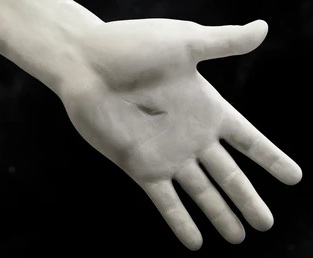
His message doesn’t slap us down with blame and shame. He reaches out with nail-pierced hands to lift us up to godliness.
So, let’s not look to his word and ways as something that beats us down. Rather, let’s be refreshed by the return to encouragement that his message always has been.
And then, we can sit back and enjoy the truth of God, no matter how strange the surrounding plot is that conveys his message.